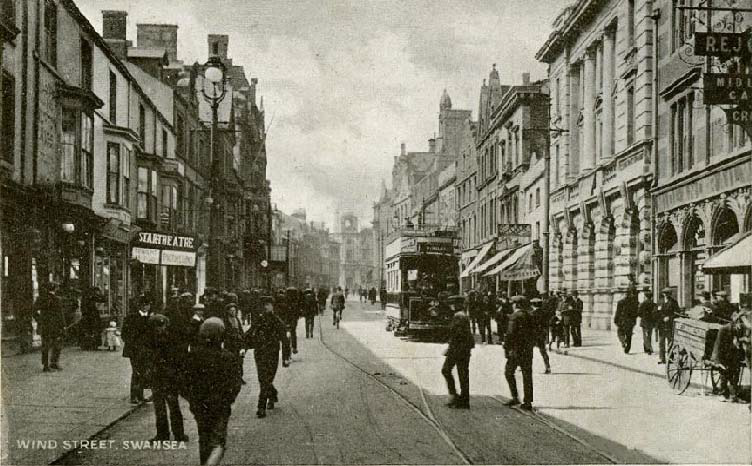
Today, Windstreet is the heart of Swansea’s nightlife, a place where many, including myself have spent too much on vodka, made some bad life decisions and definitely not gone for a swim in the now demolished fountain. Back in the day, when I was a fresher, around 2020, wind street was pretty much closed, but it certainly didn’t get in the way of us enjoying it once it re-opened. Windstreet, today is the hub of the city’s drinking culture, the heart of the city night time economy. The people of my era, will remember Fiction vividly, a venue I have worked.
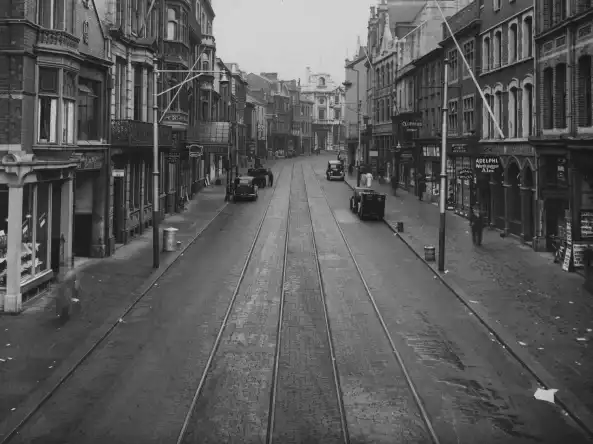
Windstreet has a history of being the hub of the city, and remains the hub of socialisation.
Medieval Roots & The Market
In the 11th and 12th centuries, Wind Street was the primary thoroughfare of the Norman town, stretching from the gates of Swansea Castle toward the sea. During the medieval times, wind street was home to the city’s thriving market.
It’s though the streets name, refers to “wynding”, being close to the swansea bay, and being a wind trap.
The Victorian “Wall Street” of Wales
By the 19th century, Swansea was the metallurgical capital of the world (“Copperopolis”). Wind Street transformed into the city’s prestigious financial and professional heart. The Vivian Family, helped place swansea on the map, being industrialist copper mining and processing family. The heart of Swansea Copper district, was located in the area of where the now swansea.com stadium stands.
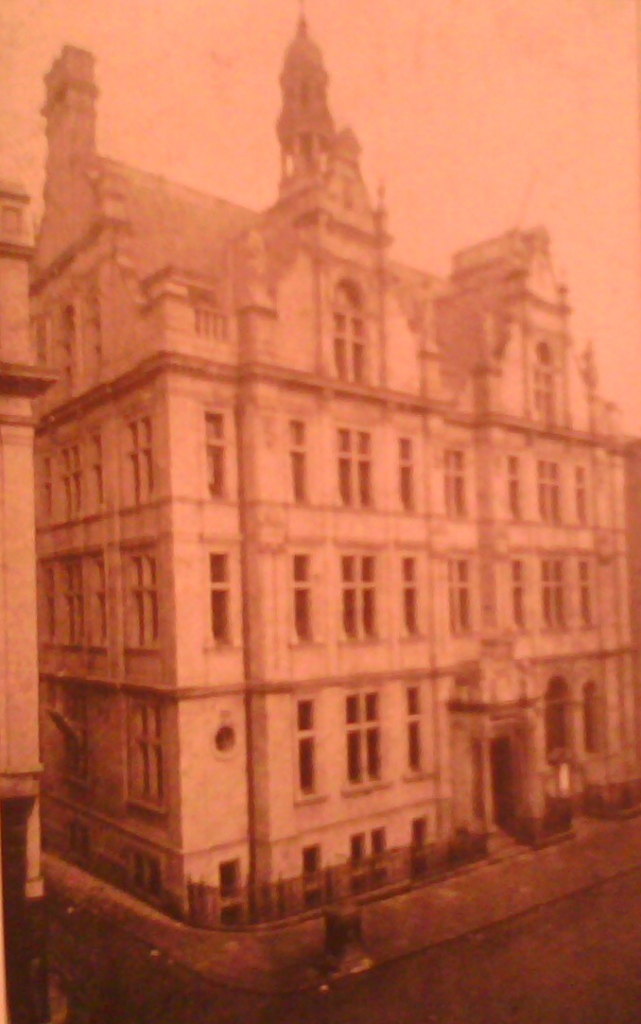
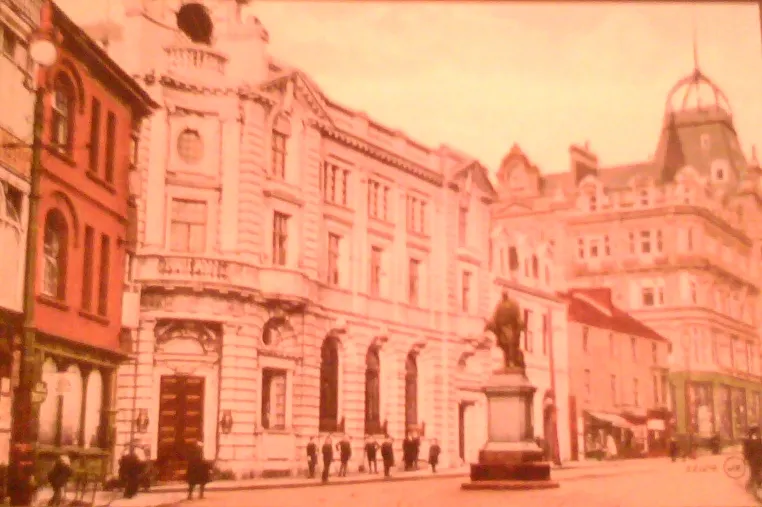
Windstreet, then was the city’s gateway to the world, its probably of no surprise, that many of the buildings on the street were once financial institutions, with venue names such as Bank Statement, previously a bank. The now Bonnie Rogues, was once a post office, the old vault still exists and now being used as the venues cellar.
The famous No Sign Bar (dating back to the 1400s in parts) was a favorite haunt of poet Dylan Thomas. He famously referred to the city as an “ugly, lovely town,” and Wind Street was the center of his social world.
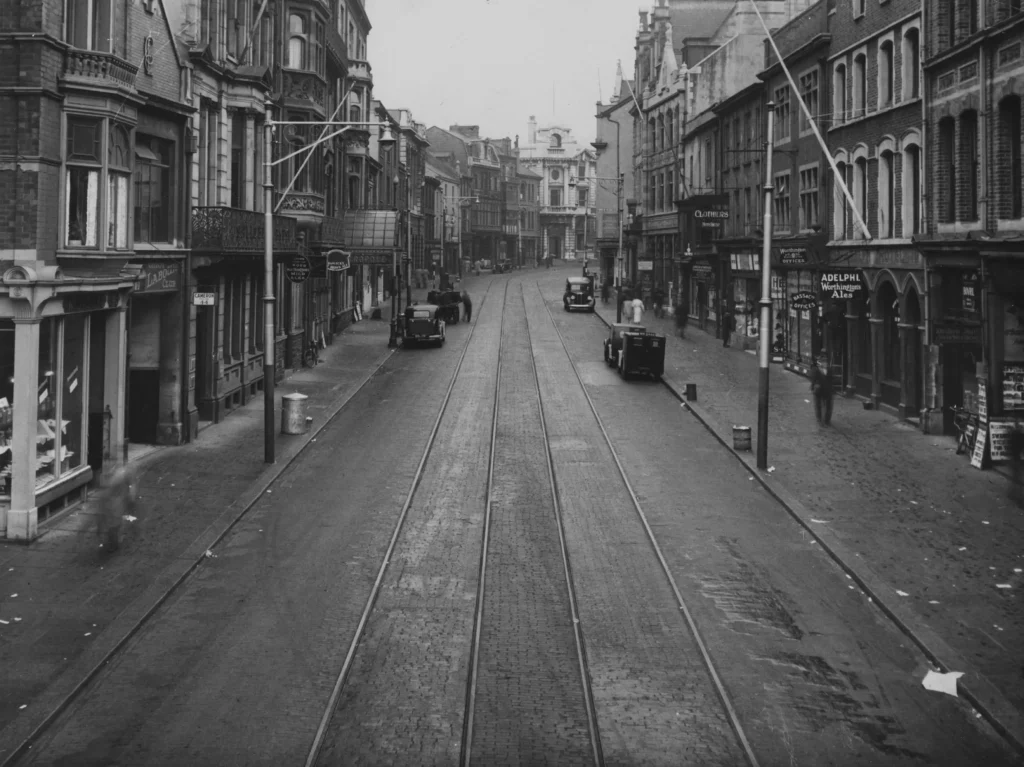
The Adelphi, a historic pub was a popular Victorian hotel. During WWII, it was famously frequented by American GIs stationed in the area.
While Windstreet was the financial heart of Swansea. The street behind, known as the strand was formally a warehouse and transport powerhouse for the swansea industrial machine. Products bought in from Swansea Docks, were stored in warehouse units on the strand, ready to be transported across the UK.
Ships from Chile, Australia, and Cornwall would bring raw copper ore into the docks. The finished copper products (like “sheathing” for the bottom of Royal Navy ships) were then stored in these Strand warehouses before being shipped across the British Empire.
The War (WW2)
Swansea was victim to one of the biggest bombardment attacks in the UK, destroying a large part of the city centre. Windstreet, was largely unaffected. Many of the buildings on the street, are original post war buildings.
Post-War & The Nightlife Shift
In the 1970s and 80s, the street was still dominated by banks and the main Post Office. However, as banking moved online and to corporate parks, these grand Victorian buildings became vacant.
In the late 1990s, a wave of regeneration turned these former banks into high-volume bars and restaurants. It quickly became the “Golden Mile” of Swansea’s nightlife, replacing The Kingsway as the city’s entertainment hub.
Goose and Granite (Now Popworld): Located at No. 2 Wind Street, this was one of the first traditional old buildings given a “trendy” 1990s makeover. It moved away from the quiet, dark-mild atmosphere of old boozers and introduced the high-volume, modern pub style that would soon dominate the street.
The Square (Now Dorothy’s): Opening shortly after, The Square was a massive statement of intent. It converted a grand, high-ceilinged former bank into a sprawling multi-level bar. It was sleek, modern, and light-years away from the gritty “superclubs” on The Kingsway.
Varsity (Now The Griffin): Taking over the old HSBC building at the top of the street, Varsity brought a more student-focused, “corporate-cool” vibe. It proved that you could fit hundreds of people into a historic bank vault and make it a destination.
Bank Statement: In 1999, Windstreet gained the Bank statement in a building previously occupied by Barclays Bank. The building had been occupied as a bank since 1914.
Aspers: Located in the now Coyote Ugly building, spreading back to the now Vue and Swansea Bowl, once one of the biggest casinos in Wales.
Fiction: Owned by Luminar PLC (Aka Deltic Group and Rekom UK), is the streets biggest night time economy venue, holding around 1500 guests. When Rekom UK fell into Liquidation, the venue was taken over by Eden, which as of April 2026, has now closed.
Windstreet Tunnels
A popular urban legend, is the existence of tunnels linking the castle to the docks, often assumed they were built for smugglers to import good from the docks without paying import dues. While a full “secret highway” has never been mapped, several buildings on the street do have tunnels. For example, the Chelsea Cafe (on nearby St. Mary’s Street) has a documented tunnel heading toward Wind Street that is over 200 years old. Historians generally believe these weren’t for “James Bond-style” escapes but were practical drainage culverts or vaulted storage spaces for the medieval market.
Many of these buildings have vast, vaulted basement tunnels that were used to move goods directly from the docks on The Strand into the storage rooms of the shops and banks above. If you’ve ever been in the lower levels of the bars on the “river side” of the street, you are essentially standing in those old industrial tunnels.
In the Victorian era, it was common to build “pavement vaults”—extensions of a building’s cellar that sat directly under the public sidewalk. This allowed coal to be dropped through holes in the pavement (coal holes) directly into the basement. These often look like tunnels when uncovered today.
While most are strictly off-limits for safety, you can see the “spirit” of these tunnels in the No Sign Bar. Its cellars are incredibly old (some parts dating back to the 14th or 15th century) and give you the best sense of the “hidden world” that exists just a few feet beneath the party-goers above.
Images used in this post were obtained from https://ididitthisway.wordpress.com/2012/01/09/wind-street/
Leave a Reply